
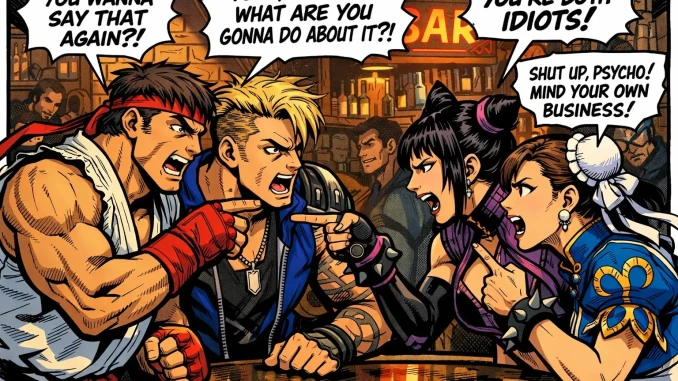
Street Fighter debates always start with a joke and end with a design argument. People argue about tier lists, controllers, “aura,” and YouTube content, but the loud opinions usually point to something real: what the game rewards, what it punishes, and whether its direction feels consistent.
Here’s the same core content, reshuffled and rebuilt again with a different structure and flow.
1) The Game’s Biggest Problem Isn’t Balance. It’s Consistency.
A lot of players say the game feels “bad” competitively. That’s usually not a literal claim that everything is broken. It’s frustration.
What fuels it is the sense that SF6 sometimes plays like two different games:
- One group of characters runs aggressive, low-risk rushdown that snowballs fast.
- Another group feels “honest,” with clearer weaknesses and limits built into their kits.
When these two philosophies exist in the same meta, matches can feel unfair even when they’re technically balanced. The rules feel different depending on the matchup, and that’s what makes people tilt.
2) Mechanics Feel Locked, So People Feel Stuck
Older Street Fighter games changed over time. Not just patches, but mechanical evolution. New options appeared. The game “grew.”
SF6 doesn’t feel like that yet. Its systems are tightly interlocked:
- Parry influences Drive Rush rewards.
- Drive Rush shapes neutral and confirms.
- Combo structure is built around these interactions.
So big changes are risky. The result is a worry that SF6 may get only minor tweaks instead of meaningful additions. That matters because players love the feeling of new discoveries. Without that, the scene can feel stagnant even if the game is healthier than day one.
3) The Content Problem Might Be the West, Not the Game
A common complaint: SF6 YouTube content feels repetitive.
Ranked highlights. Tier lists. More ranked highlights. Another tier list.
That’s not “wrong,” but it narrows the culture. What’s interesting is that some of the more experimental, varied SF6 content tends to show up more in Japanese creator circles—travel vlogs, technical controller discussions, execution challenges, and creative formats that aren’t just “I played ranked again.”
So if SF6 content feels stale, part of that may be the creator ecosystem choosing safe formats, not the game being incapable of fun.
4) Input-Hiding Boxes: Practical for Stick, Weird for Pad
This “negative aura” debate is funny, but it has a competitive core.
On arcade stick, inputs can be seen and even heard in side-by-side setups. Motions are big. That can leak information. Covering inputs is at least defensible.
On pad, the idea that someone is reading your thumb movements mid-match is a stretch. That’s why people treat it differently. The legitimacy depends on what problem you’re solving.
In competitive culture, tech is respected when it’s functional. It gets mocked when it looks like theatre.
5) The Single-Player Hunger Is Still There
World Tour exists, but many players want something else: a cinematic campaign that pushes the core cast forward and treats the story like an event.
Street Fighter has iconic characters. Fans want them placed in a narrative with real momentum, not just a sandbox avatar experience. Whether Capcom will go further is unknown, but the demand isn’t going away.
Final Thoughts
A lot of the loudest takes are just emotional shorthand for deeper issues:
- SF6 is stable, but that stability can feel restrictive.
- The meta feels more balanced than day one, but design philosophies clash.
- The game might not be stale, but parts of the content culture are.
- “Strong” characters aren’t always strong for the reasons people repeat.
If Capcom wants SF6 to feel fresh long-term, it isn’t just about buffs and nerfs. It’s about clarity: one coherent design philosophy, and enough evolution to keep players feeling like the game is still moving forward.